Translate

Showing posts with label Quintus the Roman. Show all posts

Tuesday, January 11, 2022

Illustrated Summary of The Chosen: Season 2, Episode 7: Reckoning


This episode opens with Atticus in Capernaum, demanding an audience with the Roman praetor Quintus, who addresses him as Atticus Aemilius Pulcher. Atticus says, "I come bearing intelligence." Quintus says, "I bear ears." The news is about Jesus of Nazareth, whom Quintus is seeking for questioning, as posted notices attest.
Atticus brings news about Jesus.
Jesus and  His disciples are also in Galilee, planning for a big sermon. The Lord tells them, "Everyone has a part to play in the execution of this sermon. Here's what I want each of you to understand. It's the why of this sermon. It's not that we need to make our presence felt, and it's not about the details of how we make this happen. The details matter and all of you will make sure this is executed well, but what makes this sermon so important is each person who will be there." He asks Philip what makes John the Baptizer's sermons so memorable. Philip answers, "He spoke directly to whoever was there. It was personal." Jesus agrees, but points out that since thousands will be at this sermon, He won't be directing it to one group of people over another. "But what I say will be for each and every one of them," He affirms. "They're coming because word is spreading from the signs and wonders, but what I will be giving them is far more important: truth. This will define our whole ministry, and that's what we need to focus on."
Jesus prepares with His disciples to teach truth to multitudes.
Rabbi Shmuel returns to his home synagogue in Capernaum with Yanni. He is greeted by Rabbi Yussif, who with Shmuel saw Jesus heal the paralyzed man lowered from a roof. That is just the man Shmuel wants to talk to because he wants help finding the striking Ethiopian woman who brought her paralyzed friend to be healed by Jesus after she witnessed Him heal a leper. Yussif comments, "There's no law against healing a leper." Shmuel says, "But if that healing happened on Shabbat, like the healing of the lame man at the Pool of Siloam, then a pattern has emerged." He obviously wants to use the Ethiopian woman in his attempt to charge Jesus with blasphemy. Yussif regards her as a person, not a tool, and knows her name: Tamar. Yussif reminds Shmuel that the rabbinic courts do not accept the testimony of a woman, but Shmuel hopes Tamar can lead him to the leper. Yussif sensibly asks, "Do you think anyone healed of leprosy would reveal damning information about his healer?" Yussif seems disappointed that Shmuel's time in Jerusalem studying false prophecy has led to this. 
Rabbis Shmuel, Yanni, and Yussif confer.
While Jesus and His disciples prepare for the sermon, Simon and Andrew are fishing to provide the group with food. As they talk, it is clear that Andrew is worried about the opposition Jesus is experiencing from the religious leaders. Simon reminds him, "Jesus knows how to handle Himself. He doesn't need us riding to His rescue." Andrew says they can't let what happened to John the Baptizer happen to Jesus. He doesn't want to make a scene everywhere they go, thinking that's common sense. Simon, however, tells him, "I think Jesus is more an uncommon-sense guy. Get used to different, Brother." (What Jesus said to Simon after calling Matthew the tax collector to follow Him.) Andrew retorts, "I'm being smart!" Simon tells him to leave smart to Thomas and Matthew. Andrew is surprised to hear him say something nice about Matthew. It is clear that Simon has grown spiritually, but that Andrew is crippled by worry and cannot be reasoned with now. Simon suggests they stop talking and just fish.
Simon and Andrew trying to fish in peace.
Shmuel and Yanni request an audience with Praetor Quintus to give information about Jesus of Nazareth. They don't get past the front desk. The condescending Romans there offer to take their statement, but when they hear what Shmuel says, they dismiss it as outdated intelligence, and say that Jesus will soon be in their custody. The Romans ask what they know about the Zealots, whom Shmuel and Yanni are shocked to hear associated with Jesus. Shmuel warns the Romans not to underestimate Jesus.
Rabbi Shmuel warns the Romans not to underestimate Jesus.
Atticus marches with a group of Roman soldiers led by Gaius (who was promoted to Primi because of his association with Matthew, whom he came to admire). Atticus learns that Gaius plans to act like they own the city they're heading toward, arrest their man, and be home by breakfast. Since that Galilean city, Jotapata, is  notoriously anti-Roman, Atticus suggests they go straight to Jesus's camp just south of the town. Gaius, being sensible, agrees and also realizes Atticus is with them for a particular reason not yet stated. Atticus says, "You've got good instincts, Primi. I am intrigued by your prey, Jesus of Nazareth. I saw a man who had not stood on his own two feet in half a century bounding like a boy. I watched a martyr throw down his weapon and take a knee. I saw a lunatic's eyes go clear. Jesus of Nazareth did those things. He doesn't strike me at all as threatening or scary, and that scares me. Maybe I'm just interested to know how He will take to wrist irons."
Gaius and Atticus at the head of the arrest squad.
Simon tells Andrew on the boat how he enjoys fishing because it's in their blood and they don't have to think much. Andrew frets about what happened with eating the grain on Shabbat and says something critical about Mary Magdalene. Simon asks, "Do you think you are not going to make another mistake in your life? She went through something terrifying and dealt with it the best way she knew how." Andrew says, "She should have gone to Jesus." "She knows that now," says Simon. "If you remember, He was disarming Crazy Simon from his dagger." "Oh, he's the crazy Simon?" quips Andrew. "You worked an honest trade dishonestly!" "That's how I met Jesus. Unexpected roads," observes Simon. Andrew goes back to criticizing Mary, voicing the terrible thought that the tension she caused in the group led Jesus to snap at the Pharisees. Simon warns him that's fear talking, not faith, and says, "You're the one who told me Jesus is the Messiah. Am I going to be the one to remind you now?" Andrew says, "The very fact He is the Messiah means there's going to be trouble, maybe even a war." Simon counters, "If you were building an army, would you start with Little James and Thaddaeus? You think Jesus is drawing up military plans when He goes away to desolate places?" Once again they return to fishing in silence, Andrew facing the sea and Simon the shore, where Simon soon spots the Roman soldiers closing in on their camp. He tries to brace Andrew, whose eyes grow wide with fear when he sees them himself. 
Watching the Romans close in.
On land near the water and away from the camp, Jesus spots the soldiers coming  and gestures to those with Him to be calm, sending Matthew and Philip back to the camp to tell the others, "I will be back. Keep planning for the sermon." After the soldiers encircle them with swords to the ready, Gaius steps forward, saying, "Jesus of Nazareth, You are sought for questioning by a Roman authority. Will You surrender to detainment peacefully?" Jesus answers, "Yes." John the Son of Thunder says, "Jesus, no!" Jesus quietly shushes him. "Are You armed?" asks Gaius. "No, I am not, but some of My followers are" is the reply. All the soldiers loudly draw out their swords. Gaius calmly orders, "Tell all Your followers to drop their weapons and step back 10 cubits."
Jesus's calming gesture.
The Romans draw swords.
Jesus says He will and asks if He may say goodbye to His eema. When He realizes Gaius is unaware that is the Hebrew term for mother, He gives the Latin equivalent: mater mea. Gaius says yes. Jesus embraces Mother Mary, telling her not to be afraid, and then tells James and John to do as Gaius ordered. While they obey, Gaius gestures for a couple of soldiers to apply the wrist irons on Jesus, who notices Gaius making furtive glances. He says to him, "Matthew is safe and doing well. He's back at the camp." Gaius approaches Him and says, "You all look underfed, filthy." Jesus says, "We had a bit of a hungry spell, but we have men on the water stocking us up." Gaius gets closer and says softly, "He's used to eating well!" Jesus answers quietly, "Shall we talk about this later?" Gaius turns and orders loudly, "Move out!" Atticus is the last to do so, smiling with approval over how Jesus handled Himself.
Jesus receives permission to say goodbye to His mother. He tells her not to be afraid.
Jesus reassures Gaius about Matthew, Gaius's former colleague.
Atticus is impressed by how Jesus handled Himself.
Simon and Andrew run up to the other disciples, now standing all together at their camp. Simon, slipping into bad habits, demands, "Did you do nothing while He was arrested?" James and John make it clear that is what Jesus wanted and that He was detained, not arrested. Those are meaningless words to Simon. Andrew wants to go after them, but John tells him they agreed to surrender peacefully. Andrew reminds them of what the Romans are doing to John the Baptizer. He says in a frenzied voice, "They're going north. I'll catch them in Jotapata and petition for His release!" John replies, "Andrew, He didn't ask for our help." Andrew insists He shouldn't have to, saying with disgust, "I don't recognize any of you!" His brother tries to calm him, but Andrew runs off. Philip offers to follow him, explaining he gained much experience waiting for John the Baptizer to come out of Roman jails. "Why wait?" says Simon the Zealot. "Let's break Him out." Andrew stomps back to grab his travel bag and then leaves. Philip follows, telling them, "Don't wait up."
A heated exchange of ideas.
In Jotapata Shmuel and Yanni happen to have just arrived in their search for Tamar, who they heard has been going from town to town in the north with her formerly paralyzed friend to give testimony about his healing at Jesus's command. They see it is a very intense place characterized by religious fanaticism. For a few coins, a beggar woman tells them about an Ethiopian lady who upsets men dressed like them in their black and white Pharisee robes.
Extreme Pharisees at Jotapata.
"I will be back," Jesus said, the disciples recall. Simon the Zealot suggests that maybe Jesus intended them to be the fulfillment of those words. Nathanael says disapprovingly, "Zealots, with your secret handshakes and codes!" Simon defends himself, saying, "I'm not a Zealot anymore, just zealous. There's a difference." Nathanael counters, "You just interpreted plain speech about trust and peacefulness as code for insurrection." Big James, nicknamed Son of Thunder, defends Simon, saying, "I think he's onto something. The Rabbi told us how important this sermon is. We can't let anything stop it." His brother adds, "With Zee's skills I think we could do it." Mother Mary reminds James and John to be mindful of what Jesus called them. John, missing her point, seems to think a little thunder is perfect for a time like this. Mary Magdalene says, "I think we should do what He says and wait here for Him." John scoffs about listening to the advice of someone who disappeared for two days. Ramah says, "How dare you!" Thomas says, "Don't talk to her like that!" John says something nasty about Thomas. Mother Mary says, "Boys! You're acting like children." Matthew speaks up: "Nathanael's right: the words were plain." Mary Magdalene adds, "I made a mistake leaving camp. I was wrong. I'm sorry, I relied on my own observation, my own understanding so heavily. Jesus said He will be back." 
Learning to take Jesus at His Word.
When Andrew and Philip arrive at Jotapata, Andrew is unnerved by seeing Pharisees and others swaying back and forth, chanting, and seeming oblivious to their surroundings. Philip says, "Don't worry about them. They're here for God or to preen. You don't get in the way of either." Andrew shakes his head at these people, commenting, "And they say we're extreme!" As they head toward the jail, they hear a woman clearly giving glory to God that her friend is able to stand before the crowd they are addressing. Philip says approvingly, "Now that's more like it!" Andrew takes a closer look and recognizes Tamar and the once-paralyzed man lowered through the roof Jesus healed. Someone in the crowd shouts out, "I hear He consorts with Samaritans." Tamar says, "I cannot personally confirm that, but it wouldn't surprise me." The healed man says, "Who cares who He ministers to? I was paralyzed for 23 years and I stand talking to you on two feet!" A Pharisee asks, "Who on earth can claim authority on earth to forgive sins?" Tamar answers, "The kind of Person who can tell a paralyzed man to stand, and the miracle happened in front of dozens of witnesses!" Someone says, "It could be witchcraft or sorcery!" The healed man replies, "Witches and sorcerers require payment for their services, and He gave freely." Someone wants to know why He is in hiding. Tamar says, "We don't know. He told the leper on the road to keep it a secret." When asked why she is telling this, Tamar replies, "He gave us no such order to remain silent. I believe He will make Himself more known soon."
Andrew sees familiar faces.
Many different people listen to their testimony.
Andrew hops onto their platform. Tamar and her friend instantly recognize him. He persuades them to speak with him in private, but the crowd seems sorry to see them go. Andrew, still filled with anxiety, says, "You must stop drawing attention to Jesus of Nazareth!" Tamar rightly responds, "How can we not speak of what we have seen? How can you remain silent?" "The Romans!" blurts out Andrew, but he chokes on tears. Philip leads them all to a better location to tell what happened.
Talking privately.
Jesus is led by Gaius and Atticus before Praetor Quintus, who asks, "Did He resist?" No, answers Atticus. "His followers?" asks Quintus. "Peaceful and compliant," responds Gaius. After dismissing Gaius and inviting Jesus to sit, Quintus says with glee, "Jesus of Nazareth, we finally meet!" "Here I am," says Jesus. Quintus remarks that he thought Jesus would be taller and more crazy looking with wild hair and animal skins. "Glad I could disappoint you," responds Jesus. Quintus says, "The first story I heard about you I didn't believe it." "That's usually how it goes," says Jesus. Quintus tells Atticus it was about an impossibly large catch of fish, and then asks Jesus if He has ever visited the Far East. Jesus answers, "I have received visitors from there, but have never been there myself." Quintus tells Him about people there who eat their fish raw, but spit out the bones, and uses that as an analogy to describe how he views Jesus and His ministry. That large catch of fish allowed a large tax debt to be settled that otherwise could have resulted in his demotion. Quintus regards that as flesh, but he regards as bones the healing of the paralytic, which led to crowd-control problems that damaged his reputation, and His calling Matthew away from being a Roman tax collector. He goes on to say that Atticus, whom he describes as the most tenured of the   Cohorte Urbanae, personally witnessed Jesus disarm a Zealot sicarii, a feat Quintus declares is flesh. Jesus says, "Sorry to cause so much confusion for you over flesh and bone." Quintus summarizes, "You seem to be splitting your time between creating headaches for Rome and victories we could not achieve ourselves."
Atticus adds, "You have doubled Your followers since leaving Capernaum, yet You returned a violent man who had been terrorizing Jericho to his senses." Quintus says to Jesus, "I don't know what to make of You." "That's going to be a lot of people's problem with Me," says Jesus. "No more bones, Jesus," says Quintus. "No more draining my talent pool, creating spectacles and crowds. No more meddling." Jesus answers, "I cannot promise any of these things." "Then I cannot promise You won't stop breathing," says Quintus. "Well, it sounds like we're clear on what we can and cannot promise," responds Jesus. Quintus laughs and says, "Jesus of Nazareth, I like You! Just don't make me kill you." Jesus says, "I won't make you do anything, but My Father, on the other hand—" Quintus cuts Him off, wanting to end on a high note by declaring that he thinks they have come to an understanding. He tells Jesus He is free to go. As Jesus stands and turns to leave, Quintus adds, "Sorry about Your cousin, but marching into Herod's court and moralizing was not a very wise or brave thing to do. Jesus responds, "He knew what he was getting himself into." "Do You know what You're getting Yourself into?" asks Quintus. Jesus merely says, "It was a privilege to speak with you today, Quintus." When Jesus leaves, Quintus laughs, saying that was fun and that he thinks Jesus will be a pleasant diversion for the people. Atticus laughs too, but obviously at Quintus for underestimating Jesus. 
Jesus is no threat to Rome.
Shmuel and Yanni receive word in Jotapata from people who just heard the testimony of the Ethiopian woman and her paralyzed friend whom Jesus healed. As they learn what direction those two were headed, they are stopped by Madai and Lamech from the Wadi Qelt synagogue, who compare notes with them about Jesus's Sabbath healings and invoking of Messianic titles.
Religious officials comparing notes about Jesus's Shabbat healings.
Meanwhile, Andrew is still with Tamar the Ethiopian and her friend in Jotapata, discussing what Jesus has done since  they last saw Him. Andrew tells Tamar it is dangerous to speak openly of Jesus now, and receives affirmation from a surprising source: Rabbi Yussif from Capernaum, who came to warn Tamar that Shmuel is seeking to twist her testimony to discredit Jesus as a false prophet. He apologizes to Andrew for speaking harshly to him at the feast at Matthew's house, and explains that he knows his master, Rabbi Nicodemus, saw something remarkable in their Master, Jesus. Yussif states, "Rabbi Shmuel is threatened by what he can't comprehend. Worse, Shmuel is ambitious. He does not honor Nicodemus's teaching." He acknowledges the healing of the paralyzed man and urges him to leave immediately to avoid being trapped by Shmuel. The man agrees to leave and lay low, but expresses the hope that things don't stay quiet. Philip arrives to report that Jesus is not in the Roman jail. He and Andrew take Tamar with them to join Jesus's followers.
Rabbi Yussif gives a discrete warning to help Jesus and His disciples.

Back at the disciples' camp at night, Simon the Zealot is the first to spot Jesus's approach. He wants to know if Jesus is hurt. The other Simon asks if Jesus is safe and if anyone followed Him. Jesus greets His mother and answers, "Yes, I'm safe and they just wanted to talk." Matthew says, "I'm very happy!" Jesus chuckles and says, "I'm glad, Matthew. The Romans don't find Me much of a threat, which is fine." Zee says, "Hopefully that will change soon." John asks, "So what were You doing out here?" "Praying, John," answers Jesus. "Remember, there's a big event to prepare for." Big James respectfully expresses dismay that Jesus didn't tell them first He was back.
Jesus returns, just as He said.
Jesus says, "Did I not tell you that I would be back and to keep planning? You're all going to have to learn how to do this regardless of what's happening, good or bad. Things are only going to get more difficult. You can't just shut down when you're fearful. And what are you going to do when I'm no longer here?" John and Simon express that they're all still figuring this out, but that they can do better. John asks about teaching them how to pray, like John the Baptizer did with his students. Big James adds, "I'd like to know more about what You're saying when You're out alone." Jesus says in a glad tone, "Now you're behaving like true students! This is what I like to see. Prayer is the first step in getting the mind and the heart right. That's why you see Me go to it so often." One of them says, "So teach us, please, to pray as You do." "When we pray," Jesus explains, "we want to first start with acknowledging our Father in heaven and His greatness, so you can say, 'Our Father in heaven, hallowed be Your name.' And we always want to be sure to do God's will and not our own, so we say, 'Your Kingdom come, Your will be done on earth as it is in heaven.'"
Jesus happily obliges when His disciples ask Him how to pray.
Hours later, Jesus wakes up Matthew and asks him to come with Him, explaining, "I've been forming fragments of teaching in My mind for some months now in preparation for the sermon. I'm ready to organize them." Matthew says he will gather his writing materials, but then adds, "You've just returned from detention. Will these teachings make things worse?" Jesus says, "I'm here to make things better, not worse, Matthew." Matthew explains, "What I mean is for all of us who love You." Jesus says, "No promises." "It must be tonight?" asks Matthew. Jesus states, "The time has come."
Jesus tells Matthew it's time to organize the Sermon on the Mount in writing.


Saturday, January 1, 2022

Illustrated Summary of The Chosen: Season 1, Episode 1: I Have Called You by Name


This first episode of the series begins by telling us, "The Chosen is based on the true stories of the gospels of Jesus Christ. Some locations and timelines have been combined or condensed. Backstories and some characters or dialogue have been added. However, all biblical and historical context and any artistic imagination are designed to support the truth and intention of the Scriptures. Viewers are encouraged to read the gospels. The original names, locations and phrases have been transliterated into English for anything spoken."

We see a man humming outside a tent at night by a crackling fire in Magdala around 2 B.C.  He begins coughing deeply. A little girl of about 5 or 6 years comes out of the tent, inquiring, "Abba?" She is tightly clutching a doll. Her father addresses her kindly, saying, "You should be sleeping, Little One." She protests that she cannot sleep so he invites her to sit down. He asks if she is thinking about what he calls "the big, new star,"  known later as the star of Bethlehem, and points it out to her. 
It turns out that the little girl is simply scared, of what she does not know. Her father says, "Hey, what do we do when we are scared?" She answers, "We say the words." He continues, "Adonai’s words from the prophet Isaiah: 'Thus says the Lord, who created you, O Jacob, and He who formed you, O Israel: "Fear not."'" He gently encourages her to say the words herself so he can hear her pretty voice. She replies, "Fear not, for I have redeemed you; I have called you by name. You are Mine." The father repeats, "You are mine. That's right." He kisses her and she smiles, hugging a wooden doll close to her chest.
A young woman wakes up suddenly from a dream. We know it is the little girl grown up because we see the same wooden doll nearby looking a few decades older. A caption tells us she is in the city of Capernaum 28 years later. Something has gone badly wrong for that woman since she has blood on her hands and a young man is fleeing downstairs from where she is staying. Blood is running down his neck. He tries to get help and blurts out to a Roman soldier, "She tried to kill me. Demons live inside her!" That soldier realizes something needs to be done soon about this threat in his district.
The credits for The Chosen television series usually run after an introductory scene like we just viewed. The gray fish on the screen represent most people in this world; the teal fish swimming against the stream one at a time represent Jesus, the Chosen One,  and those who follow Him.
In an elegant covered wagon, an elderly Pharisee is praying. His well-dressed wife is with him. The wagon comes suddenly to a halt when the servants pulling it see 5 Roman soldiers riding swiftly toward them. When they approach, their leader dismounts and walks to address the couple in the wagon. The Pharisee asks, "Why have you stopped us?" The Roman answers lightly, "It's not enough to say hello?" The Pharisee states, "I'm on official business." The Roman asserts, "Only Roman business is official business. My name is Quintus, the praetor of Capernaum." Before the Pharisee can state his name, Quintus interrupts him, stating, "You are the great Nicodemus. Word travels fast."
Nicodemus wants to know what Quintus wants from him, but Quintus takes his time in making that known since he enjoys asserting his dominance, especially over the subjugated people of Israel. Quintus tells Nicodemus, "I'm a magistrate, not a military man. I serve the will of the people and Pilate [the Roman governor]." Nicodemus tells him, "And I serve only God." Quintus replies testily, "Yes, yes. So do your enemies: the Sadducees, the Essenes, the Zealots, and rogue preachers in the wilderness raving about a coming Messiah. They are all vying for the people's attention." Eventually Quintus tells Nicodemus he will help the Pharisees to thrive if Nicodemus will help him collect unpaid taxes that have something to do with fish.
Earlier that morning, a rich young man is going through a fastidious routine as he gets ready to go out for the day from his stately home. In his courtyard he takes a leather satchel from a slave waiting for him, slings it across his body, and locks his large golden front door. He looks ill at ease in the street, covering his nostrils and turning his back toward people walking by and rats scurrying in corners. Not watching his feet with care, he steps into a pile of animal refuse and wretches.
A man with a covered wagon calls out to him surreptitiously. He uses a rude term to refer to the wealthy young man, who is a publicanus: a Jewish man paid high wages by the Romans to collect taxes from Jewish subjects. The tax collector, whose name is Matthew, limps over toward the wagon. Before he gets in, he discards his soiled sandals on the street and puts on a new pair he had stored in his satchel just in case. Outraged, the man with the wagon points at the old sandals, exclaiming, "That's a month's salary for all my sons combined! You just toss them out?" Matthew tells him, "These are my property. I do with them as I wish. I pay you to drive. You sift through trash on your own time." The driver scoffs, "Driving you is a bit of both. If any citizen asks about my cargo, I must tell the truth: It's the biggest pile of dung in all Capernaum!" As he laughs, Matthew covers himself with a heavy cloth in the wagon.
Matthew, the tax collector, hidden in a cart.

Nicodemus sits outside with a rapt audience of rabbis from the synagogue of Capernaum. He tells them, "I always look forward to my annual visit to Capernaum and your magnificent Sea of Galilee. It is truly the envy of the kingdom." Delighted, they all applaud. Nicodemus tells them a joke about the Dead Sea to the south and then says, "Your sea boasts the most exquisite fish."
Turning serious, he continues, "How unfortunate that those who do the actual fishing are unholy, foul-mouthed, given to gambling in secret dens, and even fishing on Shabbat. Can we eat the catch and not be stained by the sins of the catcher?" Nicodemus asserts (contrary to what Jesus will soon assert later), "Make no mistake, it is a sin to eat fish caught on Shabbat. What goes into the body of a man defiles him. Why are our Jewish brethren taking their boats to sea on Shabbat? I assure you, the Messiah will not come until this wickedness is purged from our midst. Your actions are being watched and studied. God has entrusted you to be exemplary in every way. Now, if your status is too great a burden, you do not deserve to bear the name of Israel."
Later, a young Pharisee named Shmuel (alternate spelling of Samuel), directing fellow Capernaum rabbis to host Nicodemus, says in a nervous, fussy voice, "He's a member of the Great Sanhedrin in Jerusalem. I won't have him seated at a dull table!" Shmuel orders another young Pharisee named Yussif (alternate spelling of Joseph) to straighten out his tallit (prayer shawl). Shmuel catches his breath as Nicodemus walks into their synagogue, blurting out, "Teacher, you have moved us all!" Everyone bows before him. Nicodemus acknowledges Shmuel by name and makes a joke about fish to make his young audience feel more at ease.
Rabbi Shmuel is upset by dust on a table.
Rabbi Yussif tries to adjust his tallit.
Later, Nicodemus tells Shmuel before them all, "A fine Torah room is the heartbeat of a worthy synagogue." Shmuel instantly responds, "Thank you, teacher of Israel. You do us a great honor." "The honor is mine," says Nicodemus, "not only for your bright students, but also for the soul of this city. You heard my address." "Your words will resonate for generations," gushes Shmuel. "You were luminous!" adds Yussif. Nicodemus returns to the subject of Jews taking boats to sea on Shabbat, pressing Shmuel on what he personally plans to do. Shmuel pledges to control it better. He explains, "The Romans believe we do not work on Shabbat so they do not patrol the seas then. Greed has overcome the fishermen." Yussif, seeking to be fair, says, "Or they are just trying to feed their families." Rabbi Shmuel gives Yussif an angry look. Rabbi Yussif looks down.
The entrance of a Roman soldier puts a halt to this conversation. He whistles, admiring the finery of the synagogue, and says, "Impressive. Looks like we're not the only ones taxing the people." Nicodemus asks, "What do you want, Commander?" The soldier states, "I'm no commander but at least you know your place." Shmuel hotly replies, "This is Nicodemus, teacher of teachers: Show some respect!" The officer is happy to hear that: "Just the man I want to see. I'm here about a Hebrew woman in the Red Quarter." Since that is the most disreputable part of town, the Pharisees protest to having anything to do with a disruption there, but the soldier insists that because this involves demons, a holy man is required. If Nicodemus will not help, the officer threatens to set the Red Quarter on fire. Nicodemus will reluctantly agree to help, bringing Shmuel and Yussif to assist him.
The man secretly transporting Matthew the tax collector stops his wagon and tells Matthew to get out. Matthew is upset because the man is dropping him off at the edge of town instead of taking him straight through to his tax booth. Matthew offers to pay him double, but the man hisses, "Money won't buy the stink off me and my family if I am seen with you. Out!" Matthew protests as he gets out, "This is very unprofessional." "Fire me," dares the man, shaking his head in disgust.
As Matthew tries to slink through town unnoticed, we see why he was willing to pay double. He covers his nose repeatedly, finding it hard to bear normal city smells. A boy spots him and cries out harshly, "Tax collector, go!" That draws the attention of the adults around Matthew: a woman gives him a disdainful look, a man spits at him, and a blind beggar grabs at him, saying, "Please, are you the Messiah?" Matthew shouts, "No, I am not!" The beggar says, "Please tell me when he comes!" When Matthew shakes him off, he finds himself staring at a long line of customers waiting for him at his booth.
Matthew stands by the locked door of the booth. When a Roman soldier approaches, Matthew says, "You're late, Gaius." Gaius replies with cheerful contempt, "I know. Could you feel it? The market's on fire today. Everybody's on edge. All it would take is one person to snap and you are ..." "Just do your job," says Matthew, trying to refuse what is obviously one of many attempts to upset him.
Another soldier in another part of town is leading Rabbis Nicodemus, Shmuel, and Yussif through the Red Quarter toward the demon-possessed woman. He enjoys observing how uncomfortable those Pharisees are being there. When they reach the house, they hear unnatural shrieks coming from the woman inside. Truly horrified, Nicodemus taps on Shmuel's shoulder and tells him in a shaky voice that he needs sulfur, nettles, hyssop, and wormwood. Shmuel is frozen in place at first, staring, but soon gets going.
The Roman soldier, asserting dominance, says to Nicodemus, "Well, do your job." Nicodemus, trying to assert his own dominance and dignity, tells him, "Listen, I agreed to Quintus's request—not a demand because he should not demand anything of me—to stop Shabbat fishing, which is already our law and not a violation of my practice. And I will try to help this woman, even though it falls outside of my purview, but do not think of me as a tool to fix Roman problems! I will not continue to use my position of religious influence to benefit those who look down on my people, whether it's you or someone like Quintus. So, I will perform this task but I want it noted for your superiors this is an exception!" The Roman, who has been listening quietly with a bemused expression on his face, merely replies, "So can we go now?" Nicodemus answers yes with disgust.
We see a group of working-class men taking bets as they watch two young men fight in a pit. One of the men in the pit is Simon. The other is his brother-in-law Jehoshaphat, who has been going after Simon like this for weeks. Simon is down, but looking slyly at his brother Andrew's hand signals to determine when to get up and knock out "Jeho" when the betting is most advantageous for them. Their secret plan seems to work until  Jeho's brother sneaks up and gives a knock-out blow to Simon. Andrew regretfully hands over their betting money.
By the Sea of Galilee, Simon is dabbing his nose with cold water and protesting the unfairness of that two-on-one fight. Andrew knows fairness is not a consideration in this group and regrets his foolishness for getting involved. Simon apologizes for talking him into it. They share their concern about tax day coming up. Andrew, a worrier by nature, fears the worst: that they could lose their fishing boat, their means of income. Simon gets up and strides toward that boat, intent on going to work, even though the Shabbat rest begins in an hour. When Andrew protests, Simon replies, "The Pharisees make allowances if lives are at stake." "No one's life is at stake" says Andrew. "No, not this moment, but it's coming," replies Simon. Alluding to John the Baptizer, whom Andrew has been helping, Simon adds, "Are you going to tell your bug-eating friend about this?" Andrew starts walking toward the boat, but Simon decides not to drag his brother into this sin and tells him to go home. Andrew inquires about Simon's beloved wife, Eden. Simon tells him Eden already planned to spend Shabbat at her eema's (mother's) house, so he is hopeful only Andrew will know he was fishing on Shabbat.
Two Roman soldiers are holding a battering ram near the door of house where the demon-possessed woman is staying. The horrible shrieking from her continues. Nicodemus tries talking with the woman's hostile landlady, Rivka, who is concerned that all he and the Romans are going to do is mess up her place and not lift a finger to help afterward. Nicodemus tells her sternly, "The demons that torment her soul will turn your place to dust. Even if you care nothing for her soul, at least—" Rivka, who really does care for her, interrupts: "Lilith never hurt anyone who didn't hurt her first, mostly. She has these spells. We let her be and then she's as sweet as an angel again." Hearing the shrieking growing worse and things getting smashed inside, Rivka softens and asks Nicodemus if he really can put an end to her friend's suffering.
The battering ram easily opens the locked door. Nicodemus walks in slowly, shaking bells attached to a smoking incense censor he is waving about. Addressing the demons, Nicodemus says with increasing fervor, "I adjure you by the holy angels Michael, GabrielRafaelUriel, and Raziel. I adjure you, cursed dragon and diabolical legions, come out! I adjure you, spawn of BeelzebubAbbadon, and Sheol! By the utterance of all the watchers and the holy ones, in the name of Adonai, God of the heavens, cease to deceive this human creature! I command you, in covenant with Abraham, in the names of Jacob, Isaac, Moses, the all-powerful El Shaddai, fly from this innocent soul!"
Rabbis Shmuel and Yussif watch and listen  with Nicodemus as the demon-possessed woman moans throughout this recitation and then suddenly becomes silent when Nicodemus finishes. Lilith rises slowly and stares mockingly at Nicodemus. Multiple demon voices speak through her feminine voice as one, telling him, We are not afraid of you. You have no power here, teacher.” Nicodemus, now terrified, backs away slowly and tells his fellow rabbis,  "We're finished here!" He  exits swiftly with Shmuel following on his heels. Yussif takes a last look at the woman before leaving.
Shabbat morning, Simon walks through town in his work clothes with his head held low as he passes by people dressed for worshiping at the synagogue. He sneaks into his house, puts down his work tools, and washes his feet before entering the main room. His wife, Eden, steps out into the room, calling out his name sharply with her arms folded. He responds, "Hello, love," but she quickly says, "Don't you 'Hello, love' me,' demanding to know why he beat up her brother Jehoshaphat. "He attacked me again," Simon explains. Eden tells him, "He needs to know the husband of his sister is strong. But Andrew had no right to jump Abrahim from behind!" Simon makes it clear that's not what happened.
Eden suddenly laughs and says, "My brothers are fantastic storytellers, no?" "Tellers of fantastic stories, yes," responds Simon, who tells her more about the fight. "Oh no," says Eden, "they shouldn't cheat you like that, but you also were cheating." Simon concedes that last point. Continuing to make light of the situation, Eden explains that her family is colorful and fun, contrasting that with Simon, whom she comically describes as "stoic and purposeful." He says, surprised, "You think I'm stoic?" She clarifies affectionately, "Well, compared to me. Together, we're perfection." He likes that, adding, "You and me: fire and water." Eden inquires how fishing went for Simon yesterday, not realizing he was fishing on Shabbat. He tells her he pulled something in that could be big. She says, "Good. Let's go to synagogue. Please change—you smell."
The demon-possessed woman now called Lilith wakes up on a stone pavement near an open door after dreaming about her father telling her as a little girl, "What do we do when we are scared? We say the words, Adonai's words: 'Thus says the Lord, who created you, O Jacob, and He who formed you, O Israel: "Fear not."'" Poor Lilith has blood on her hands and clothes. She slowly rises and walks into her disheveled room. As she washes her hands and face, she pictures in her mind her father coughing and then later standing by his deathbed as a little girl, clasping her doll tightly, watching as a woman drapes a blanket over his head.
Lilith, sobbing, looks for that old doll in the mess created from her demon-possessed state. Finding it, she eagerly takes off the head and pulls out a small scroll from within the doll, reading, "Thus says the Lord who formed you, O Jacob, and He who created you, O Israel: Fear not." Suddenly a terrible memory comes to mind that makes her pound her head. We briefly see a Roman soldier dragging her into a room while she was talking to him outside as a teenager. Lilith tries to calm down and finish reading the Scripture from Isaiah, but she becomes frustrated and rips up the scroll. She sinks to the floor in tears. Lilith was actually known as Mary of Magdala (Mary Magdalene) when she was little.  Luke 8:1-4 in the Bible tells us that Mary eventually became possessed by seven demons. 
The next thing we see is Lilith walking slowly along a wall with drinking tables outside. She knocks rhythmically at a door and gives this password when her knock is answered: Chaverim maqqaba. Lilith enters the bar known as The Hammer, the nickname of famed Jewish deliverer Judas Maccabeus. The barkeeper, Sol, warmly greets her as Lili, happy to see she is alive after hearing about her most-recent bout of demonic oppression. Sol gives her something strong to drink. 
Lili tells him, "Yesterday they brought in a holy man—someone important, maybe even from Jerusalem. I only remember bits and pieces in flashes." "A Pharisee?" inquires Sol. "He's a leader of the Pharisees, but he ran away in terror," answers Lili. Her concern is that her condition is getting worse, but he tries to reassure her, saying, "One religious big shot's just as full of it as the next." Lili, not reassured, tells him loudly, "I am in hell." Other bar customers stare at her. Sol encourages her to try the drink he put before her.
Lili gives him her old doll, wrapped up as a present for a young family member. He thanks her, observing it was well loved. She tells him, "It used to hold something valuable. I don't need it anymore." He says, "You're beginning to scare me." She comments, "You and everyone else" before tasting the strong drink, which she says is terrible, but still she thanks him for it. Then Lili tells him, "There's something I need to do." Not liking the sound of that, Sol ignores a bar customer who calls out to him, telling Lili, "You listen good: You drink that up, and then the next one and the next one. Stay here until you feel better or until hell comes. And if it does, we face it together." She smiles and says, "Not if you were my worst enemy." Lili takes one more sip before leaving the bar as Sol tends to insistent customers.
At twilight, Nicodemus is seated and looks troubled in thought as his wife, Zohara, rushes about their room. Noticing, she tells him, "We'll be late to dinner!" He says in a low voice with head bowed, "I know." Zohara, understanding what is bothering him, insists, "You did everything you could for her." She urges him to put the failed exorcism out of his mind. Nicodemus whispers, "I can never forget what I saw." Zohara says, "Tonight, you are an honored guest. Leaders will expect you to perform and have your wits about you." Resenting that, Nicodemus rises and states, "Why must I perform? First I perform for Quintus, then for the soldiers, and then for the slum dwellers. What sort of performance is this tonight? When did Shabbat become theater?"
Zohara tells him firmly, "You are the Teacher of Israel. You do not have questions; you have answers. You have authority. You bring clarity, not confusion." Nicodemus urges her to stop with her preparations and come to him. He puts his hands on her shoulders and urges her to look into a mirror and tell him what she sees. Zohara retorts, "That is a cheap glass. I can barely make out anything at all." Nicodemus says quietly, "Sometimes I wonder if what we can know of Adonai and the Law is just as blurred. What if we're not seeing the whole picture? What if it's more beautiful and strange than we can ever imagine?"
She stares at him disapprovingly and says, "That is the most ridiculous thing I ever heard. It might even be blasphemy." Nicodemus responds, "It was just a thought." Zohara tells him, "You will never utter those thoughts in public." Nicodemus quietly asserts, "A man is free to question in his heart, Zohara." She says sharply, "Then leave it in your heart. This is a serious engagement! They expect an erudite teacher, not a doubting, blaspheming fool."
Nicodemus tells her, "Others saw what happened in the Red District." Zohara asks, "But what did they see? You rose to your rank on merit. You have dedicated your life's work to serve God, not become Him." Now she puts her hands on his shoulders. Nicodemus sighs and says, "I failed." Zohara tells him, "Stop it: It was a mistake to be there in the first place. From now on, stick to the Academy. Leave exorcism to the exorcists." Taking that in, Nicodemus concedes, "You're right. I should never have been there." "You spoke the words," continues Zohara. "The demons did not respond." Nicodemus concludes, "Only God Himself could have drawn them out." Zohara opens the golden front door of their guest house and says impatiently, "Nico." He replies, "I'm coming."
In the morning it is tax day for Andrew and Simon. Looking nervous, Andrew heads for the tax booth with a small pouch of coins. Before joining Andrew, Simon looks at his wife sleeping in bed, contemplating what he must do to protect and provide for her.
Nicodemus that morning is speaking with fellow Pharisees, trying to explain his exorcism failure. He reasons: "When we follow God's Law to the letter, God is alive through us. Now imagine, if you can, one who heeds only wickedness for a lifetime. Demons root in wicked souls as pigs in filth. A possession like this was fatal, and souls such as hers, sadly, are beyond all human aid." (Nicodemus will begin serious soul searching as he becomes increasingly aware of the shallow religious faith inside himself and those around him, including his wife and the rabbis.)
Lilith tentatively approaches a high sea cliff, weeping as she gets nearer. At the edge she opens one hand and tosses the pieces from the small Isaiah scroll that was once tucked inside her doll. As she looks down and prepares to make a fatal leap, a noisy dove fluttering above catches her eye. It flies directly away from the cliff. Lilith once again looks down, but the bird chirps loudly and Lilith feels compelled to back away from the cliff and keep focusing on that special dove. She follows it away from this deadly place.
Simon asks his brother as they walk together to the tax booth, "How much do you trust me?" "With my life," answers Andrew. "Let me talk to the tax man, Matthew," says Simon. Andrew decides he doesn't trust Simon that much. Simon asks him, "What if I told you I could save the boat and put us back in good standing?" Andrew doesn't believe him, but is soon humiliated when talking with Matthew at the tax booth and finding out how much debt they are in from exorbitant interest rates especially. Simon interrupts and tells them, "What my brother didn't mention is our arrangement with Quintus." Matthew, shocked, asks, "You have business with Quintus?" Simon answers, "Yeah, my brother's debt and a year gratis for both of us." Matthew tells him sternly, "This will be verified with Quintus directly. If there's any inconsistency—" Simon interrupts to inform him there won't be and directs Matthew to give back Andrew's small bag of coins. Gaius, the Roman soldier guarding the booth, also looks surprised, but he and Matthew let the brothers go in peace for now.
At The Hammer, Simon and Andrew are seated at a table inside. Simon tells his brother, "Fishing did not go like I planned the other night. I caught nothing, net after net empty. But I caught a breeze around the point and now knew why the nets were empty: a merchant fleet, six boats across, netting everything. I followed them, thinking maybe I'd catch them sleeping or snatch a net during cleanup, but it didn't work. I even anchored and swam in, thinking maybe I could get scraps, but they loaded up like clockwork. They had carts with mules, ready to move. So I sail home, dock up, and then see a sniveling Roman standing on the shore. I couldn't believe it: They never bother patrolling on Shabbat. But then I realized they don't get the tax because we don't report any Shabbat catches. So I told the Roman when he confronted me that if he took me straight to Quintus, I'd let them know who caught more in one night then they guy they're arresting catches in a week."
Andrew, shocked, says, "Wait, so you offered to turn in fishermen?" "No," answers Simon evasively: "Not fisherman, but merchants." Simon then tells his brother that Quintus himself walked up in back of him just then. "He's thorough, I guess," says Simon, "so we talked and what I said to Matthew was real." Andrew tells him, "I don't like it: It's dangerous." "So is sleeping outside," quips Simon, adding, "Besides, what has a merchant ever done for you?" "So what?" persists Andrew. "They are our people." Simon, undaunted, claims, "We're clearing the way for the little guy, leveling the playing field." Andrew rejects that we and says, "You will be cursed if you inform on them. We are not doing anything." Simon tells him sarcastically that he better hurry to catch the taxman and that maybe there will be enough daylight to get out of his house before the Romans take it. Simon strides away from their bar table. Andrew pounds it in frustration before following his brother. Meanwhile, Gaius reluctantly accompanies Matthew for an audience with Quintus to verify Simon's claim.
Lilith, still fixing her gaze on the dove that just saved her life, is led by it back to the door of The Hammer. Before she can enter, Simon and then Andrew speedily her pass by. Andrew actually bumps into her but is so absorbed by his own problems that he compounds his rudeness by ignoring her. Lilith, apparently used to such treatment, is unfazed and slowly enters the bar when she cannot see the dove any longer.
Sol the bartender notices Lilith seated and looking distraught. He expresses sympathy and chases away a young man showing her unwanted attention. Lilith decides in despair that she wants alcohol and lots of it. Sol tells her, "That's not going to solve your problems. It's mean to distract from them." "No more preaching—just give it to me," she says in a determined voice. He once again tries to get her to listen, but when she says please in a desperate voice, he reluctantly pours her a drink.
She reaches out her hand toward the drink, but a man places his hand over hers, and presses it down gently. She looks down at that hand, saying, "I said leave me." Looking up, she sees a kind face not belonging to the young man who just bothered her. This new man looks back at her and tells her quietly, "That's not for you." Sol stares at him but says nothing. Lilith quickly withdraws her hand and says, "Don't touch me!" Then she grabs at her head as if suddenly experiencing great pain. Sol asks, "Lili, are you okay?" The new man looks at her with concern on his face. She suddenly rises and tells him to leave her alone before swiftly walking away with the drink in her hand.
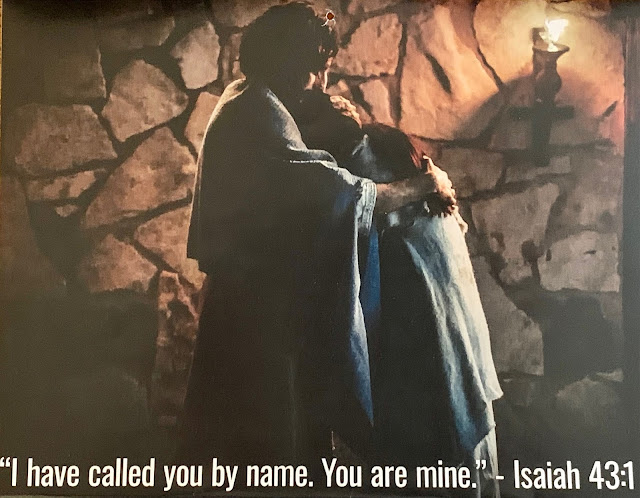
Lilith takes a quick sip as she walks through the door and looks back to see if she is being followed. She is. The new man is now out the door. He stops and calls out, "Mary." Lilith stops walking. When the man then calls her Mary of Magdala, she drops her drink and gasps. As the cup shatters, she turns around to face the man, asking, "How do you know my name?" He answers as only God can: "Thus says the Lord, who created you … and He who formed you … 'Fear not, for I have redeemed you; I have called you by name; you are Mine.'" He places His hands on her head and  heals her Mary sobs with the relief of one whose long nightmare is over.